

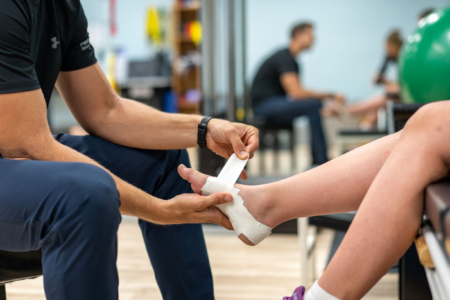
Sports injuries are common occurrences in both recreational and competitive athletics, ranging from acute traumatic injuries like ligament tears, fractures, and muscle strains to overuse injuries such as stress fractures, tendinitis, and joint impingement syndromes. These injuries can significantly impact an athlete’s performance, season participation, and long-term athletic career if not properly managed. Physiotherapy plays a crucial role in sports injury management by providing specialized treatment that not only promotes optimal healing but also focuses on safe return to sport and injury prevention. Treatment begins with accurate diagnosis and assessment of the injury mechanism, biomechanical factors, and sport-specific demands, followed by a phased rehabilitation approach that progresses from initial pain and inflammation management through tissue healing, strength restoration, and functional movement retraining. Physiotherapists utilize evidence-based techniques including manual therapy to restore joint mobility and tissue flexibility, progressive strengthening exercises that target both injured and supporting muscle groups, sport-specific functional training that prepares athletes for the demands of their chosen activity, and movement analysis to identify and correct faulty patterns that may have contributed to the injury. Additionally, physiotherapy includes education about proper warm-up and cool-down routines, load management strategies, and injury prevention techniques to minimize the risk of re-injury and optimize athletic performance.
Frequently Asked Questions:
1. How soon after a sports injury should I start physiotherapy, and what happens if I delay treatment? The timing of physiotherapy depends on the type and severity of your injury, but generally, earlier intervention leads to better outcomes. For most acute injuries, physiotherapy can begin within 24-48 hours, focusing initially on pain management, swelling reduction, and protecting healing tissues while maintaining mobility in unaffected areas. Even with more severe injuries requiring initial rest or immobilization, physiotherapists can provide guidance on what activities are safe and begin preparing surrounding areas for eventual return to full function. Delaying treatment can lead to several complications including prolonged inflammation, increased scar tissue formation, muscle atrophy and weakness, loss of joint mobility, and development of compensatory movement patterns that increase risk of future injuries. Early physiotherapy intervention helps optimize the healing environment, prevents secondary complications, and establishes a clear roadmap for recovery.
2. What does sport-specific rehabilitation involve, and why is it important for returning to my sport safely? Sport-specific rehabilitation involves progressively training your body to handle the exact demands of your particular sport before returning to full participation. This goes beyond general strength and flexibility by incorporating movements, speeds, forces, and decision-making scenarios that mirror your sport’s requirements. For example, a soccer player’s program would include cutting movements, jumping, kicking mechanics, and ball-handling skills, while a swimmer’s program would focus on stroke technique, shoulder stability, and pool-specific conditioning. This phase is crucial because it bridges the gap between basic physical recovery and sport readiness, identifies any remaining deficits that could predispose to re-injury, builds confidence in the injured area through graduated exposure to sport stresses, and ensures your movement patterns are optimized for performance and injury prevention. Your physiotherapist will use objective testing and sport-specific assessments to determine when you’re truly ready to return to unrestricted activity.
3. How do physiotherapists help prevent future sports injuries, not just treat current ones? Injury prevention is a major focus of sports physiotherapy, involving comprehensive movement screening to identify biomechanical deficits, muscle imbalances, or movement patterns that increase injury risk. Your physiotherapist will assess factors like muscle strength ratios, joint flexibility, movement quality during sport-specific activities, and previous injury history to develop a personalized prevention program. This typically includes corrective exercises to address identified weaknesses or imbalances, technique modification to reduce stress on vulnerable structures, education about proper training progression and load management, and sport-specific warm-up and cool-down routines. Many physiotherapists also provide seasonal training advice, helping athletes periodize their conditioning to peak at the right times while allowing adequate recovery. Regular screening sessions, especially during pre-season preparation, can identify emerging issues before they become injuries, making prevention programs highly cost-effective compared to treating injuries after they occur.
4. Can physiotherapy help me return to my sport at the same level of performance, or should I expect limitations? With proper rehabilitation, most athletes can return to their previous level of performance and sometimes even exceed it, as the recovery process often addresses previously unidentified weaknesses or movement inefficiencies. However, the outcome depends on several factors including the type and severity of injury, how quickly treatment was initiated, your adherence to the rehabilitation program, and your previous fitness level. Your physiotherapist will work with you to set realistic goals and timelines based on your specific injury and sport demands. In some cases, modifications to training methods, equipment, or technique may be recommended to optimize performance while protecting the previously injured area. The rehabilitation process often makes athletes more aware of their body mechanics and injury prevention strategies, potentially making them more resilient than before the injury. Your physiotherapist will use objective measures like strength testing, movement quality assessments, and sport-specific performance metrics to ensure you’re truly ready for full return to competition.